
'Retail portfolios were going nowhere even as headline indices moved higher, prompting investors to sell holdings and shift money to IPOs, attracted by listing-day gains.'

Every investor loves a bull market - that feeling of watching portfolios rise and headlines being filled with record highs is gratifying. Yet, wealth creation in the stock market is not just a matter of market rallies. Some of the most successful investors make their fortunes in periods of slow or even negative market momentum. The secret is mindset, strategy, and disciplined investing, not chasing short-term rallies.

'...aggressive pricing amid volatility, but these are exceptions.'

Benchmark equity indices Sensex and Nifty rebounded on Thursday after three sessions of losses, tracking gains in global markets after US President Donald Trump struck a conciliatory tone on Greenland. In a volatile session, the 30-share BSE Sensex climbed 397.74 points, or 0.49 per cent, to close at 82,307.37.

Market sentiment is likely to remain cautious as investors position themselves for the upcoming Union Budget and the US Fed's interest rate decision, where expectations are muted.

'If not bullish, volatility should be minimal.'

Strong performance in the beauty and personal care (BPC) segment, margin gains, and expectations of a breakeven in the fashion business lifted sentiment for FSN E-Commerce Ventures (Nykaa). The consumer technology platform's stock rose 7.5 per cent on Friday, extending gains over the past week to more than 17 per cent. Most brokerages have upgraded the stock following its third-quarter (October-December/Q3) performance and higher profit expectations ahead.

Rediff explains why the system, not the Budget, is the problem.

Investors should avoid making drastic changes to their asset allocation during a market correction.

Foreign investors pulled out Rs 17,955 crore (Rs 2 billion) from Indian equities in the first two weeks of this month, taking the total outflow to Rs 1.6 lakh crore (Rs 18.4 billion) in 2025.' This sharp withdrawal follows a net outflow of Rs 3,765 crore in November, extending the pressure on domestic equity markets.

There were 18 exits from the index between 1995 and 2000. The pace has since dropped to single-digit exits over every five-year period.

Stock markets will be driven by RBI's interest rate decision, tariff-related developments, global trends and trading activity of foreign investors in this holiday-shortened week, analysts said.

'A balanced portfolio mix of domestic and international equity, fixed income, and precious metals is recommended.'

Fund managers advise conservative investors to cap midcap exposure at 10 to 15 per cent of their equity portfolio.


'We hope we will have created a world where music for films appeals to fans across the country, across languages and genres.'

'The net inflows into MF schemes may also have been lower last month, with investors booking profit and taking a more measured approach amid elevated valuations.'

Seven listed Tata companies together own 12.1 per cent in Tata Sons with a combined book value worth around Rs 30,700 crore.

Domestic mutual funds have infused the highest ever -- Rs 4.84 trillion -- this year amid strong inflows via SIPs.
The combined market valuation of the top-ten most valued firms jumped by a whopping Rs 3,84,004.73 crore in the holiday-shortened last week, in-tandem with a smart rally in equities, with HDFC Bank and Bharti Airtel emerging as the biggest gainers. Last week, the BSE benchmark Sensex jumped 3,395.94 points or 4.51 per cent, and the NSE Nifty surged 1,023.1 points or 4.48 per cent.

The banking sector could see better loan growth in the third quarter of financial year 2026 (Q3FY26) with improved net interest margins (NIMs), though the full impact of latest rate cuts will be largely felt in the fourth quarter. There may be lower slippage in unsecured loans and microfinance institutions (MFIs) along with steady recovery trends, which should lower credit cost.

Foreign investors fled Indian equities in 2025 at a scale never seen before, pulling out a record Rs 1.6 lakh crore (USD 18 billion) as volatile currency movements, global trade tensions, especially potential US tariffs, and stretched valuations eroded risk appetite, though flows are expected to turn sustainably positive in 2026.

Prism, the parent firm of global travel tech unicorn Oyo, has filed preliminary papers with market regulator Sebi to raise Rs 6,650 crore through an initial public offering (IPO) using a confidential route, people familiar with the development said on Wednesday.

The milestone crowns a record year for the domestic primary market where IPO mobilisation is set to cross Rs 1.7 trillion.

The previous largest weekly decline was recorded in the week ended November 15, 2024.

Fundraising through pre-initial public offerings (pre-IPOs) more than doubled in 2025 compared with the previous year, but remained below the peak seen in 2023. The narrowing gap between pre-IPO and IPO pricing is the reason for the decline in both the number and value of such deals over the past two years.

RIL saw its market value plummet by Rs 20,303 cr, taking the steepest hit in the top-10 list
'From tariff tensions and border skirmishes to unrest in West Asia.' 'The worst may be behind us. But any further upmove will now have to come from earnings.'

Food delivery and quick-commerce major Swiggy, which is coming out with its initial public offering (IPO) on Wednesday, is seeking a valuation of about $11.3 billion. The Bengaluru-based company is aiming to garner Rs 11,327 crore from the IPO, which will comprise a fresh issue of shares worth Rs 4,499 crore along with an offer for sale (OFS) of Rs 6,828 crore. Swiggy has set a price band of Rs 371 to Rs 390 per share for its maiden public issue.

Shares of Dr Reddy's Laboratories jumped 5.3 per cent on Thursday to Rs 1,217 apiece, making it the top gainer in the Nifty 50 and the BSE 100 indices. By comparison, the Nifty 50 was up 0.53 per cent at 25,289.

'Earnings growth will be the main driver of India's market in 2026, with profits expected to rise 9% to 10% in H2 FY26 and accelerate to 12% to 15% in FY27.'

After two years of strong gains, smallcap stocks fell sharply in 2025, but the correction may be setting up opportunities for long-term investors.

India's real GDP growth in FY26 will slide further to 6.2 per cent in FY26 from 6.5 per cent in FY25, a Japanese brokerage said on Monday. In a research report, Nomura said there is a "divergence" between the growth in GST collections and across other high-frequency growth indicators like auto sales and bank credit growth.
This marks the strongest DRHP filing tally since 1996, when 428 firms sought to enter India's equity markets.

Despite trailing the benchmark Nifty 50, small and midcap (SMID) stocks appear pricey on a 12-month forward price-to-earnings (P/E) basis. The Nifty trades at roughly 21x forward earnings, compared with around 28x for both the Nifty Smallcap 100 and Nifty Midcap 100 indices.
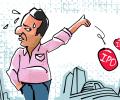
'The primary market's rhythm mirrors investor confidence. While sentiment may appear cautious, it reflects maturity, not weakness.'

'We believe the truth is in the middle, and that India is at an important crossroads.'

Dabur's business update for Q3FY26 indicated mid-single digit consolidated revenue growth. The guidance is that growth in operating and net profits will beat revenue growth. In the domestic business, home and personal care (HPC) revenue grew in double digits, while healthcare is likely to post a sequential growth in low-single digits.

The tribunal granted partial relief to the appellants by modifying Sebi's directions on trading restrictions and account freezes, making them conditional on the deposit of the said amount.

As India's biggest Unified Payments Interface (UPI) app PhonePe prepares to list, the updated draft red herring prospectus (DRHP) shows the impact of regulations on the business, and concentration of payments-linked revenue even as UPI lacks MDR (merchant discount rate).
